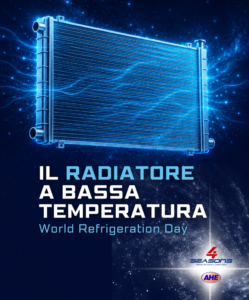
Low Temperature Radiator: an increasingly important component in modern vehicles.
In recent years, automotive manufacturers have introduced a new component that is becoming increasingly important in vehicle thermal management: the Low Temperature Radiator.
Unlike the main radiator, which keeps the engine operating at approximately 85-90°C, the low temperature radiator operates in a separate cooling circuit, maintaining the coolant temperature between 50 and 70°C. This dedicated circuit allows more effective cooling of components that require lower operating temperatures to ensure optimum performance, reliability, and efficiency.
What is the Low Temperature Radiator used for?
Why will it become increasingly important?
The evolution of the automotive industry is not only about developing more efficient engines but also about achieving increasingly precise thermal management. Turbocharged engines, hybrid powertrains, electric vehicles, and advanced electronic components all require dedicated cooling circuits operating at different temperature levels.
The Low Temperature Radiator is therefore one of the most significant innovations in modern vehicle thermal management. Its adoption is expected to become increasingly widespread because it improves efficiency, reliability, performance, and the service life of both mechanical and electrical systems.
Temperature management has become one of the key pillars of today’s automotive technology and will be even more critical in the future.